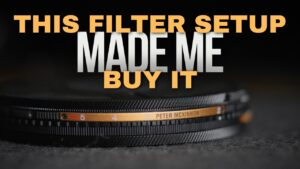
Swapping filters in the middle of a shoot is not an option for me. Light changes fast, the shot list doesn't care, and nobody hires a filmmaker to stand around unscrewing glass while the moment walks away. That one constraint is what pushed me to the PolarPro Helix Maglock system - and it's the filter I actually use now.
In the video above I go through the system on my camera and explain why I switched. The short version: it's magnetic, it's fast, and the built-in polarizer fixes problems I used to just accept as part of the job.
No hype here. Just what it does, why it stuck, and who I think actually needs it.
The Problem: Filter Swaps in the Middle of a Shoot
If you've only ever shot personal projects, this might sound dramatic. It isn't. On a real shoot you're moving between sun and shade, interiors and exteriors, wide shots and close-ups - and the filter that was right ten minutes ago is wrong now.
Traditional threaded filters make that moment painful. You unscrew one ring, screw on another, and hope you don't cross-thread it or press a thumbprint into the glass while everyone waits. That's dead time, and dead time on set is the most expensive thing there is.
So my requirement was simple: changing filters has to take seconds, not minutes. That requirement is basically why I went looking in the first place.
What the Helix Maglock System Actually Is
Helix is PolarPro's magnetic filter system. Instead of threading a filter onto the lens every time, the filters snap on and off magnetically and lock in place. That's the core trick, and it sounds almost too simple until you use it under pressure.
Here's what stood out once it was on my camera:
- Filter changes take seconds. Snap off, snap on, keep rolling.
- The polarizer is built into the system, so glare control isn't a separate accessory I have to dig out of a bag.
- It locks. Maglock isn't just branding - the filter clicks in and stays put while I move between setups.
- No threads to fight, which also means no cross-threading and fewer fingerprints on the glass.
None of this is revolutionary on paper - magnetic filters have existed for a while. But the execution, the way it works as one system instead of a pile of loose accessories, is what made it stick for me. Pun intended.
The Built-In Polarizer Is the Quiet Star
Glare is the thing clients never name but always notice. Hot reflections on windows, water, car paint, even skin - it reads as cheap footage to an audience, even if nobody can say exactly why.
A polarizer cuts that glare and lets color come back through. Skies deepen, foliage stops looking like plastic, reflective surfaces calm down. That part is just what polarizers do. The difference with Helix is that the polarizer is part of the system, so I'm not weighing whether it's worth the hassle. It's already there.
That changes behavior more than you'd expect. The best filter is the one that's actually on your lens when the shot happens.
What It Did to My Workflow
The honest summary: filters stopped being a thing I think about. When changing them is annoying, you shoot compromises. When it takes a couple of seconds, you use the right filter every time. Since switching, my workflow has been smoother - which was the entire point.
On my Sony setup it's been a quiet upgrade. Nothing about the footage screams new filter system, and that's the goal. Glare is under control, colors hold up, and my attention goes to the shot instead of the gear.
Verdict: Who Should Actually Buy This
If you shoot paid work - clients, deadlines, light you don't control - I'd call the Helix system a must-have. It removes a recurring point of friction from every single shoot, and gear that does that keeps paying you back long after you've forgotten what it cost.
If you shoot occasionally, on your own schedule, with time to fiddle? A basic threaded filter will do the job for less money. No shame in that. This system earns its keep under time pressure; if you're never under time pressure, you'd be buying a solution to a problem you don't have.
For working filmmakers, though, it solves a real problem in the most direct way possible. That's the whole review, really.
If you're considering it for your own camera, you can see what it's going for right now. Check the current price on Amazon
And if you want to see everything else I shoot with - the cameras, lenses, and the rest of the gear that survives real shoots - it's all on my gear page.